In children and adults 6 years of age and older with obesity due to POMC, PCSK1, or LEPR deficiency

IMCIVREE delivered weight and hunger reduction over 1 year

Young girl at a carnival

Actor portrayals

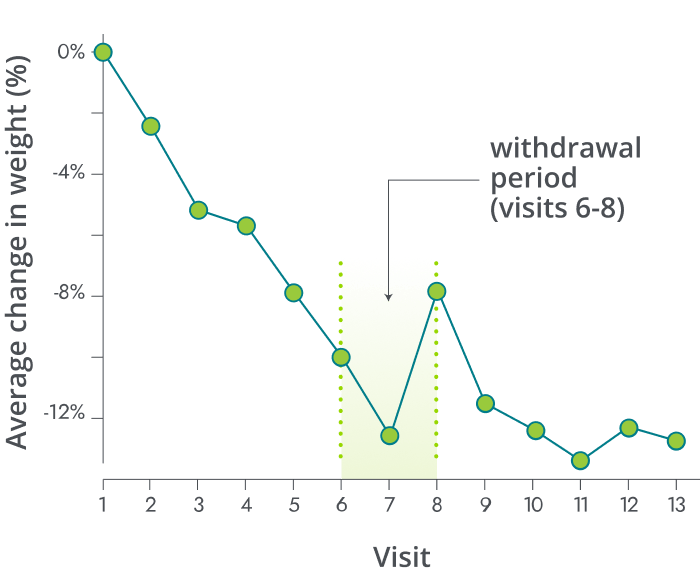
IMCIVREE reduced weight in children and adults 6 years of age and older with obesity due to POMC or PCSK1 deficiency

This study included 10 children and adults 6 years of age and older.

8 out of 10 people lost at least 10% of their body weight at 1 year

Average weight change over 1 year (n=9)*
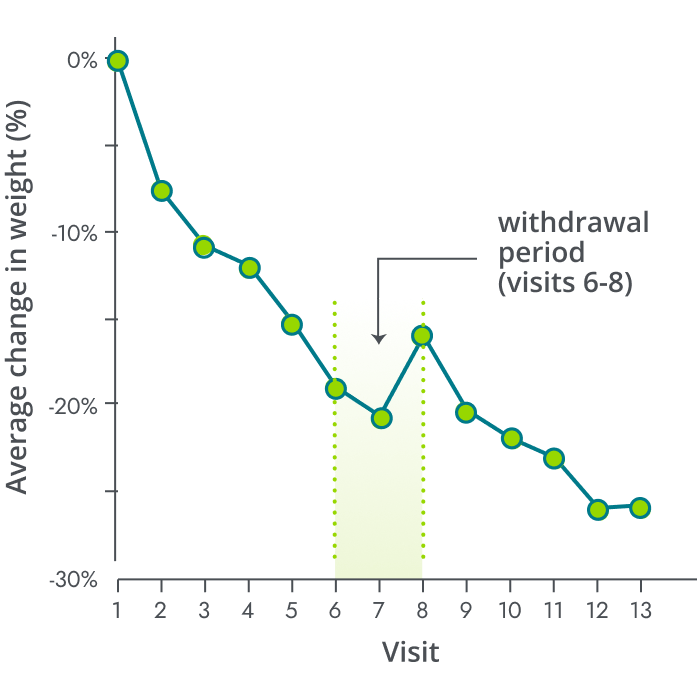
Chart showing average change in weight n=9

Weight loss with IMCIVREE continued over the year, except during the withdrawal period. When treatment was restarted, weight loss resumed.

From visits 6-8, participants went through a withdrawal period of 8 weeks, which included 4 weeks of IMCIVREE followed by 4 weeks of no treatment. Neither the investigators nor the participants were aware of when the 4-week non-treatment time period was occurring.

*Participants who experienced weight loss of 5 kg/11 lb (or 5% if their starting weight was less than 100 kg/220 lb) during the first 10 weeks.

IMCIVREE reduced feelings of hunger over 1 year

After 1 year, participants 12 and older with obesity due to POMC or PCSK1 deficiency (n=8) experienced a decrease from 7.9 to 5.5 in the median daily hunger score.

Changes in hunger were evaluated using a questionnaire that was completed each day for 1 year by participants who were 12 years of age or older. The questionnaire measured hunger using a score ranging from 0 ("not hungry at all") to 10 ("hungriest possible").

Impact of stopping treatment

Treatment was stopped for a period of time to see how it impacted weight and hunger. Over this withdrawal period:

  • Weight increased; when the withdrawal period ended and treatment was restarted, weight loss continued
  • Hunger scores generally worsened; hunger scores improved once treatment was restarted

A median is the middle value of a set of data that have been put into numerical order. The median is the value that divides the data into two halves.

IMCIVREE reduced weight in children and adults 6 years of age and older with obesity due to LEPR deficiency

This study included 11 children and adults 6 years of age and older.

5 out of 11 people lost at least 10% of their body weight at 1 year

Average weight change over 1 year (n=7)

Chart showing average change in weight n=7

Weight loss with IMCIVREE continued over the year, except during the withdrawal period. When treatment was restarted, weight loss resumed.

From visits 6-8, participants went through a withdrawal period of 8 weeks, which included 4 weeks of IMCIVREE followed by 4 weeks of no treatment. Neither the investigators nor the participants were aware of when the 4-week non-treatment time period was occurring.

Participants who experienced weight loss of 5 kg/11 lb (or 5% if their starting weight was less than 100 kg/220 lb) during the first 10 weeks.

IMCIVREE reduced feelings of hunger over 1 year

After 1 year, participants 12 and older with obesity due to LEPR deficiency (n=8) experienced a decrease from 7.0 to 4.4 in the median§ daily hunger score.

Changes in hunger were evaluated using a questionnaire that was completed each day for 1 year by participants who were 12 years of age or older. The questionnaire measured hunger using a score ranging from 0 ("not hungry at all") to 10 ("hungriest possible").

Impact of stopping treatment

Treatment was stopped for a period of time to see how it impacted weight and hunger. Over this withdrawal period:

  • Weight increased; when the withdrawal period ended and treatment was restarted, weight loss continued
  • Hunger scores generally worsened; hunger scores improved once treatment was restarted

§A median is the middle value of a set of data that have been put into numerical order. The median is the value that divides the data into two halves.

A lot has changed, and when I look at the hunger today, I’m assuming it’s on the same level as other people.

– Person who is living with POMC deficiency

I’m very satisfied I’ve lost a lot of weight, and I have a lot more energy. It’s nice to see that someone is paying attention to this, and there’s a medication for this.

– Person who is living with POMC deficiency

Now, I really feel it. My stomach growls and I notice that I am hungry. Experiencing both fullness and hunger is something I have never felt before. It's funny.

– Person who is living with LEPR deficiency

Individual results may vary.

Resource page icon

Resources and support tailored to your journey

Rhythm InTune Patient Education Managers (PEMs) offer personalized educational resources designed around your treatment journey. From providing disease education to helping you stay on track with treatment, your PEM is here to support you or your loved one.

Patient Education Managers are employees of Rhythm Pharmaceuticals and do not provide medical care or advice. We encourage you to always speak to your healthcare providers regarding your medical care.

Download the IMCIVREE Brochure for more
information.

Learn about the possible side effects
of IMCIVREE.

What is IMCIVREE?

IMCIVREE is a prescription medicine used in adults and children 2 years of age and older with obesity due to the genetic conditions pro-opiomelanocortin (POMC), proprotein convertase subtilisin/kexin type 1 (PCSK1), or leptin receptor (LEPR) deficiency, to help them lose weight and keep the weight off.

Your healthcare provider should order a genetic test to confirm POMC, PCSK1, or LEPR deficiency before you start using IMCIVREE.

IMCIVREE is not for use in people with the following conditions because it may not work:

  • Obesity due to suspected POMC, PCSK1, or LEPR deficiency not confirmed by genetic testing or with benign or likely benign genetic testing results
  • Other types of obesity not related to POMC, PCSK1, or LEPR deficiency, or other FDA-approved uses of IMCIVREE, including obesity associated with other genetic conditions and general obesity

It is not known if IMCIVREE is safe and effective in children under 2 years of age.

Important Safety Information

Do not use IMCIVREE if you have had a serious allergic reaction to it or any of its ingredients. Serious allergic reactions, including anaphylaxis, can happen.

Before you use IMCIVREE, tell your healthcare provider about all your medical conditions, including if you:

  • Have or have had areas of darkened skin, including skin discoloration (hyperpigmentation)
  • Have or have had depression, or suicidal thoughts or behavior
  • Have kidney problems
  • Are pregnant or planning to become pregnant. Losing weight while pregnant may harm your unborn baby. Your healthcare provider may stop your treatment with IMCIVREE if you become pregnant. Tell your healthcare provider if you become pregnant or think you might be pregnant during treatment with IMCIVREE
  • Are breastfeeding or plan to breastfeed. It is not known if IMCIVREE passes into your breast milk. You should not breastfeed during treatment with IMCIVREE

Tell your healthcare provider about all the medicines you take, including prescription and over-the-counter medicines, vitamins, and herbal supplements.

See the detailed Instructions for Use that come with your IMCIVREE to learn how to prepare and inject IMCIVREE, and how to properly throw away (dispose of) used syringes and needles.

What are the possible side effects of IMCIVREE?
IMCIVREE may cause serious side effects, including:

  • Male and female sexual function problems. IMCIVREE can cause an erection that happens without any sexual activity in males (spontaneous penile erection) and unwanted sexual reactions (changes in sexual arousal that happen without any sexual activity) in females. If you have an erection lasting longer than 4 hours, get emergency medical help right away
  • Depression and suicidal thoughts or actions. You or a caregiver should call your healthcare provider right away if you have any new or worsening symptoms of depression, suicidal thoughts or behaviors, or any unusual changes in mood or behavior
  • Serious allergic reactions. Stop taking IMCIVREE and get medical help right away if you have any symptoms of a serious allergic reaction including: swelling of your face, lips, tongue, or throat; problems breathing or swallowing; severe rash or itching; fainting or feeling dizzy; rapid heartbeat
  • Increased skin pigmentation, darkening of skin lesions (moles or nevi) you already have, and development of new skin lesions. These changes happen because of how IMCIVREE works in the body and will go away when you stop using IMCIVREE. You should have a full body skin exam before starting and during treatment with IMCIVREE to check for skin changes

The most common side effects of IMCIVREE include darkening of the skin, injection site reactions, nausea, headache, diarrhea, stomach pain, vomiting, depression, and an erection that happens without any sexual activity in males.

These are not all the possible side effects of IMCIVREE. Call your doctor for medical advice about side effects. You are encouraged to report negative side effects of prescription drugs to FDA. Visit www.fda.gov/medwatch or call FDA at 1-800-FDA-1088.

Please see full Prescribing Information, including Patient Information.

Use and Important Safety Information

What is IMCIVREE?

IMCIVREE is a prescription medicine used in adults and children 2 years of age and older with obesity due to the genetic conditions pro-opiomelanocortin (POMC), proprotein convertase subtilisin/kexin type 1 (PCSK1), or leptin receptor (LEPR) deficiency, to help them lose weight and keep the weight off.

Your healthcare provider should order a genetic test to confirm POMC, PCSK1, or LEPR deficiency before you start using IMCIVREE.

IMCIVREE is not for use in people with the following conditions because it may not work:

  • Obesity due to suspected POMC, PCSK1, or LEPR deficiency not confirmed by genetic testing or with benign or likely benign genetic testing results
  • Other types of obesity not related to POMC, PCSK1, or LEPR deficiency, or other FDA-approved uses of IMCIVREE, including obesity associated with other genetic conditions and general obesity

It is not known if IMCIVREE is safe and effective in children under 2 years of age.

Important Safety Information

Do not use IMCIVREE if you have had a serious allergic reaction to it or any of its ingredients. Serious allergic reactions, including anaphylaxis, can happen.

Before you use IMCIVREE, tell your healthcare provider about all your medical conditions, including if you:

  • Have or have had areas of darkened skin, including skin discoloration (hyperpigmentation)
  • Have or have had depression, or suicidal thoughts or behavior
  • Have kidney problems
  • Are pregnant or planning to become pregnant. Losing weight while pregnant may harm your unborn baby. Your healthcare provider may stop your treatment with IMCIVREE if you become pregnant. Tell your healthcare provider if you become pregnant or think you might be pregnant during treatment with IMCIVREE
  • Are breastfeeding or plan to breastfeed. It is not known if IMCIVREE passes into your breast milk. You should not breastfeed during treatment with IMCIVREE

Tell your healthcare provider about all the medicines you take, including prescription and over-the-counter medicines, vitamins, and herbal supplements.

See the detailed Instructions for Use that come with your IMCIVREE to learn how to prepare and inject IMCIVREE, and how to properly throw away (dispose of) used syringes and needles.

What are the possible side effects of IMCIVREE?
IMCIVREE may cause serious side effects, including:

  • Male and female sexual function problems. IMCIVREE can cause an erection that happens without any sexual activity in males (spontaneous penile erection) and unwanted sexual reactions (changes in sexual arousal that happen without any sexual activity) in females. If you have an erection lasting longer than 4 hours, get emergency medical help right away
  • Depression and suicidal thoughts or actions. You or a caregiver should call your healthcare provider right away if you have any new or worsening symptoms of depression, suicidal thoughts or behaviors, or any unusual changes in mood or behavior
  • Serious allergic reactions. Stop taking IMCIVREE and get medical help right away if you have any symptoms of a serious allergic reaction including: swelling of your face, lips, tongue, or throat; problems breathing or swallowing; severe rash or itching; fainting or feeling dizzy; rapid heartbeat
  • Increased skin pigmentation, darkening of skin lesions (moles or nevi) you already have, and development of new skin lesions. These changes happen because of how IMCIVREE works in the body and will go away when you stop using IMCIVREE. You should have a full body skin exam before starting and during treatment with IMCIVREE to check for skin changes

The most common side effects of IMCIVREE include darkening of the skin, injection site reactions, nausea, headache, diarrhea, stomach pain, vomiting, depression, and an erection that happens without any sexual activity in males.

These are not all the possible side effects of IMCIVREE. Call your doctor for medical advice about side effects. You are encouraged to report negative side effects of prescription drugs to FDA. Visit www.fda.gov/medwatch or call FDA at 1-800-FDA-1088.

Please see full Prescribing Information, including Patient Information.